Commercial Solar in Hull: Why Humber Businesses Are Going Solar in 2025
Hull and the wider Humber region is undergoing one of the most significant industrial transformations in its history. The Humber Freeport, the offshore wind supply chain, and billions of pounds of green energy investment are reshaping the economic geography of East Yorkshire. At the same time, commercial electricity prices continue to strain the margins of manufacturers, logistics operators, and food processors across the region. Commercial solar panel installation is one of the most direct and financially proven responses available to Humber businesses — and the case for acting now is stronger than at any point in the last decade.
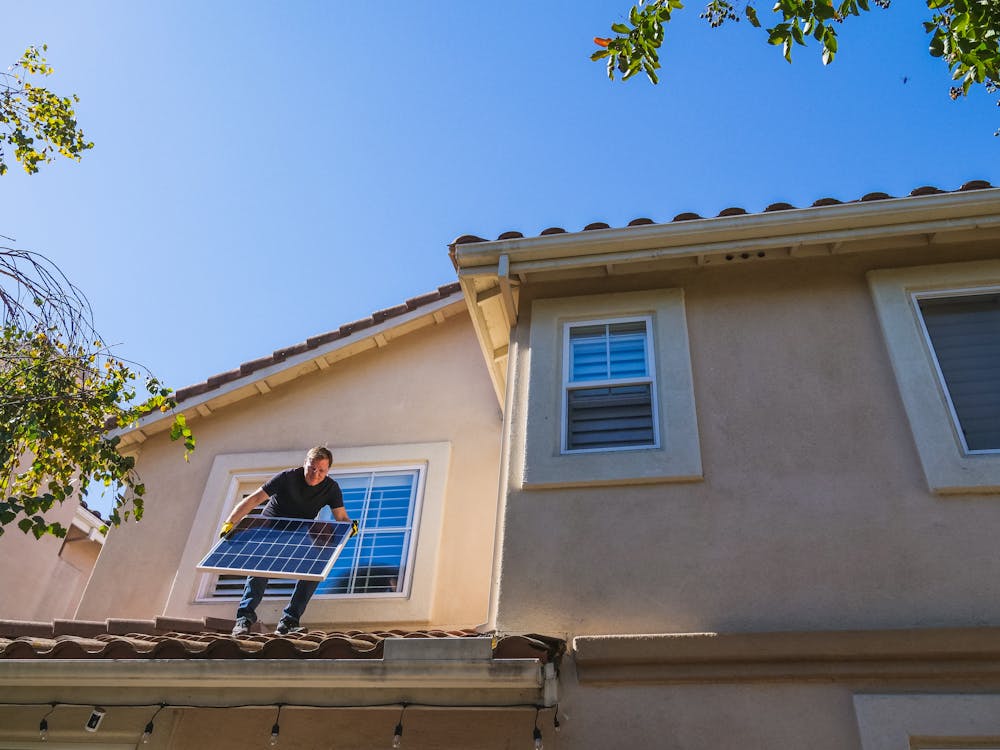
The Hull and Humber Industrial Landscape
Hull is one of the UK's most industrially dense cities. The port of Hull handles over 13 million tonnes of cargo annually, making it one of the busiest in northern Europe. The industrial estates radiating outward from the port — Hessle Road, Saltend Chemical Park, Hedon Road, Paull, and the Anlaby Road corridor — are home to hundreds of warehouses, distribution centres, food processing facilities, and manufacturing plants.
The Humber estuary as a whole is emerging as the UK's renewable energy capital. Siemens Gamesa's wind turbine manufacturing facility at Alexandra Dock employs hundreds of workers and supplies offshore wind projects across the North Sea. This concentration of renewable energy industry creates both inspiration and practical opportunity for local businesses exploring their own sustainability journeys.
Energy costs are a significant burden for Hull businesses. The region's manufacturing and logistics sectors are heavily electricity-dependent, with many facilities running 24-hour operations. Commercial electricity at 28–33p/kWh represents one of the largest variable costs for any warehouse operator, and grid prices show no sign of sustained decline.
Solar panel installation directly addresses this cost. A 200kWp system on a 5,000m² Hessle industrial estate warehouse generates approximately 170,000 kWh annually — enough to offset 30–40% of typical electricity consumption. At current rates, that is £47,000–£56,000 in annual savings from a single installation.
Humber Freeport: A Catalyst for Commercial Investment
The Humber Freeport, formally established in 2021, creates specific incentives for businesses locating or investing within designated tax sites. Enhanced capital allowances within freeport tax sites allow businesses to deduct 100% of qualifying capital expenditure in the year of purchase. Solar panel systems installed on eligible buildings within Humber Freeport boundaries qualify as plant and machinery, making the enhanced capital allowance directly applicable.
For a Hull warehouse operator investing £150,000 in a 200kWp solar system within a freeport tax site, the first-year tax relief on that investment is substantially higher than for businesses outside the freeport boundary. Combined with the standard 50% First Year Allowance available to all UK businesses, the net cost of solar after tax relief is significantly reduced.
The Freeport also brings infrastructure investment. Improved road and rail links connecting Hull's port facilities to the national logistics network are being accelerated under the Freeport programme. As distribution volumes through Hull increase, so do the energy demands on the warehouses supporting port operations — increasing the value of on-site solar generation.
Beyond tax incentives, the Freeport signals long-term confidence in Hull as an investment location. Businesses making 25-year commitments to solar infrastructure in Hull are backed by the same government-endorsed investment thesis that underpins the Freeport itself.
Solar Potential Across Hull's Industrial Estates
Saltend Chemical Park, on the eastern side of the estuary, hosts major petrochemical and pharmaceutical operations. The large flat-roofed process buildings and storage tanks are increasingly being evaluated for rooftop solar. The high electricity consumption of chemical processing — often running at full load 24 hours a day — means self-consumption ratios of 90%+ are achievable, driving exceptional project returns.
Hedon Road industrial estate, one of Hull's most established commercial zones, contains a mix of distribution, manufacturing, and trade counter operations. The estate's predominantly pitched metal roofs are compatible with standard clamp-on solar mounting systems that require no roof penetrations. G99 grid connections for the estate connect through Northern Powergrid infrastructure, and the area has generally good grid capacity for commercial solar.
Paull industrial estate, to the east of Hull on the estuary, contains large food processing and packing facilities. East-west split arrays — where panels face both east and west rather than south — are increasingly used on these sites to match generation profile to processing shift patterns, producing morning and afternoon peaks rather than a single midday maximum.
Anlaby Road and the western Hull industrial corridor connects to the A63 and provides access to the M62 motorway. Distribution operators in this corridor serve Leeds, Sheffield, and the wider Yorkshire market. The profile of these businesses — daytime distribution operations with morning loading peaks — aligns well with south-facing solar arrays that generate through the working day.
YEERS: Specialist Renewable Energy Consultancy for Hull
YEERS are renewable energy consultants with extensive experience helping commercial businesses across Hull and Yorkshire navigate the solar procurement process. Unlike installation companies who are incentivised to sell a specific system, YEERS operate as independent consultants, providing objective guidance on system sizing, technology selection, financing structures, and installer selection.
For Hull warehouse operators, this independence is particularly valuable. The local DNO — Northern Powergrid — has specific grid connection processes and capacity constraints in different parts of the Hull network. YEERS understand these constraints and can advise on system sizing, export limitation, and battery storage strategies that maintain strong financial returns even in constrained grid areas.
YEERS also provide multi-site solar strategy for businesses with property portfolios across Hull and beyond. Rather than treating each building as an isolated project, their consultancy approach considers the aggregate energy position, procurement leverage, and financing optimisation across an entire property estate.
For businesses considering Power Purchase Agreement financing — where a third-party investor funds the installation and the business buys solar electricity at a fixed below-market rate — YEERS can structure and manage the procurement process, ensuring PPA contract terms genuinely protect the business's interests over a 20-25 year agreement. You can learn more about their services at yeers.co.uk.
Financing Commercial Solar in Hull
Hull businesses have access to the full range of commercial solar financing options available across the UK. Outright capital purchase — using retained profits or capital reserves — delivers the strongest long-term financial return. A £180,000 investment in a 250kWp system generating £55,000/year in savings pays back in 3.3 years and generates over £1.2 million in cumulative savings over 25 years.
Asset finance and operating leases allow businesses to spread the investment cost over 5–10 years, matching savings to repayments and creating positive cash flow from the first month. For Hull manufacturers and distributors who need to preserve working capital for operations, this can be a better fit than capital purchase even though the total return is slightly lower.
Power Purchase Agreements (PPAs) are particularly relevant for Hull businesses with long-term lease commitments on their premises. Under a PPA, a third-party investor installs and owns the solar system, selling the electricity at 12–18p/kWh — significantly below the 28–33p/kWh grid rate. The building owner or occupier pays nothing upfront and benefits from day-one savings. The investor recovers their capital through the solar electricity sales over 20–25 years.
The Smart Export Guarantee (SEG) pays for surplus electricity exported to the grid. With typical self-consumption ratios of 75–85% for daytime Hull warehouse operations, 15–25% of generation is exported. At SEG rates of 5–15p/kWh, export revenues add a further £3,000–£8,000 per year to the financial return on a medium-sized system.
EPC Compliance and MEES Obligations
The Minimum Energy Efficiency Standards (MEES) regulations are tightening. From 2030, all commercial properties let in England and Wales will require a minimum EPC rating of B. Many Hull warehouses — particularly older stock on Hedon Road, Hessle, and the western industrial corridor — currently sit at EPC D or E, putting landlords and tenants at risk of non-compliance.
Solar panel installation consistently improves EPC ratings. The SAP calculation methodology used in commercial EPCs rewards on-site renewable generation. A 200kWp solar system on a D-rated warehouse can typically move the rating to C or B, depending on the building's baseline energy performance. Combined with LED lighting upgrades and basic insulation improvements, solar is frequently the highest-impact single measure in achieving EPC B.
For Hull landlords with multiple tenanted properties, the investment case for solar is particularly strong. An improved EPC rating reduces void risk, improves asset valuation, and demonstrates regulatory compliance to institutional investors and property funds. YEERS can model the EPC impact of solar across a property portfolio and help landlords prioritise which assets to address first.
Conclusion
Hull is at the beginning of a long-term industrial renaissance powered by the offshore wind industry, the Humber Freeport, and growing port volumes. Commercial solar is the logical complement to this green energy transformation — providing local businesses with the same renewable electricity that the region exports to the national grid. With energy costs high, compliance deadlines approaching, and financing options that require no upfront capital, the arguments for acting now are compelling. To explore what solar could deliver for your Hull or Humber warehouse, contact our team for a free assessment, or visit YEERS at yeers.co.uk to discuss your renewable energy strategy.
Related Articles
Warehouse Solar Case Studies: Real Results from UK Installations
Detailed case studies of warehouse solar panel installations across the UK. See real system sizes, costs, savings, and payback periods from distribution centres, cold storage, and logistics facilities.
Read articleHow Many Solar Panels Fit on a Warehouse Roof? UK Capacity Guide
Calculate how many solar panels fit on your warehouse roof. UK guide covering system sizing by roof area, from 50kW on small units to 1MW+ on large distribution centres.
Read articleDo Solar Panels Work on Flat Roofs? A Commercial Warehouse Guide
Do solar panels work on flat commercial roofs? Yes — and warehouse flat roofs are among the best solar sites in the UK. This guide explains why flat roofs suit solar and how systems are designed.
Read articleWarehouse Solar in the West Midlands: The Complete Guide for Midlands Businesses
Guide to warehouse solar panel installation in the West Midlands. Golden Triangle logistics, Hams Hall, Minworth, M42 corridor. Why Midland Solar are the trusted local installer.
Read articleGet Your Free Warehouse Solar Assessment
Discover how much your warehouse could save with commercial solar panels.
Request Free Assessment